
A fixed-price product in twelve weeks
If you're a founder with an idea or a prototype, a product manager, a designer and an engineer own the build from the first workshop to go-live, at a fixed price. You own the code and design when it ships.
Built to last past launch
Most first versions are built only to launch and need an expensive rebuild once real users arrive. Context also gets lost each time work passes from strategy to design to engineering. One small team that carries the decisions from discovery into every sprint avoids both.
One team from brief to launch
A product manager, a designer and an engineer own the build together, so nothing is lost between strategy, design and engineering.
Built to last
Your first version gets the data model, security and tests it needs to grow, so you don't throw it away six months after launch.
Fixed price, fixed plan
The build takes twelve weeks and costs €60,000 in total. You know the scope, the cost and the date before it starts.
Yours at go-live
Full ownership of the code and design transfers to you when the product goes live.
What we don't do: We don't run fixed-price builds shorter than twelve weeks, because compressing them removes the discovery and design phases that prevent expensive rework.
Twelve weeks to a product you own
Discovery, design and delivery run as one cycle. The decisions made in the first workshop are the ones the engineers build from, so nothing gets lost in a handover.
Weeks 1 and 2
Discover
Four workshops take you from product vision to concrete features. You get a clickable concept prototype, a roadmap with what comes now, next and later, and a blueprint with scope, architecture and the sprint plan.
- Timeline
- 2 weeks
- Cost
- €10,000, flat fee
Weeks 3 and 4
Design
The designer works in your existing design system, or sets one up. The final prototype is the file engineering builds from, with no handover document in between.
- Timeline
- 2 weeks
- Cost
- €10,000
Weeks 5 to 12
Deliver
Four sprints with a demo at the end of each, every one adding a working part of the live product. At go-live the code and design transfer to you.
- Timeline
- 8 weeks
- Cost
- €40,000
After launch
Grow
The engineers who built it can stay on full-time to keep building, at a fixed monthly fee with a three-month minimum.
- Timeline
- Ongoing
- Cost
- From €5,600 / month
Engineers after launch, against a senior local hire
You can pick your country and team size, and the full breakdown is on the pricing page.
 NetherlandsEUR
 United KingdomGBP
 GermanyEUR
 SwedenSEK
 BelgiumEUR
 IrelandEUR
 FranceEUR
 DenmarkDKK
 SwitzerlandCHF
 United StatesUSD
 CanadaCAD
 AustraliaAUD
Hiring locally in United States
- 4 months on average to hire
- Recruitment, payroll and compliance on you
Hiring with Miyagami
- Hire within five days, contracts and payroll handled
- Wrong fit: we replace at our cost
Work that looks like yours
These two builds are closest to what founders usually ask us for.
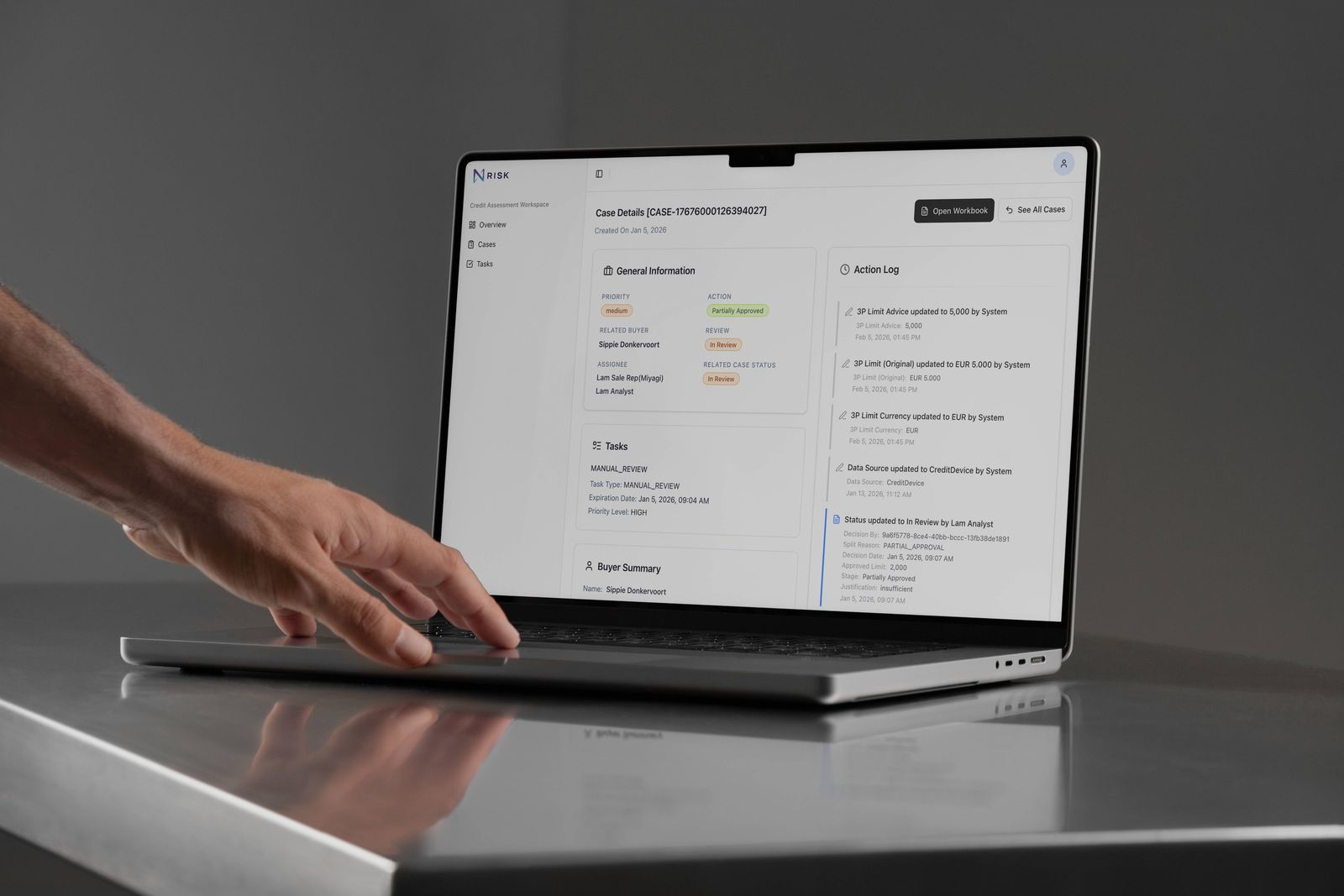

A multitenant credit risk platform from zero
A product built from an empty repository: discovery, design and engineering by one team, with the foundations defined from zero.
Read the case study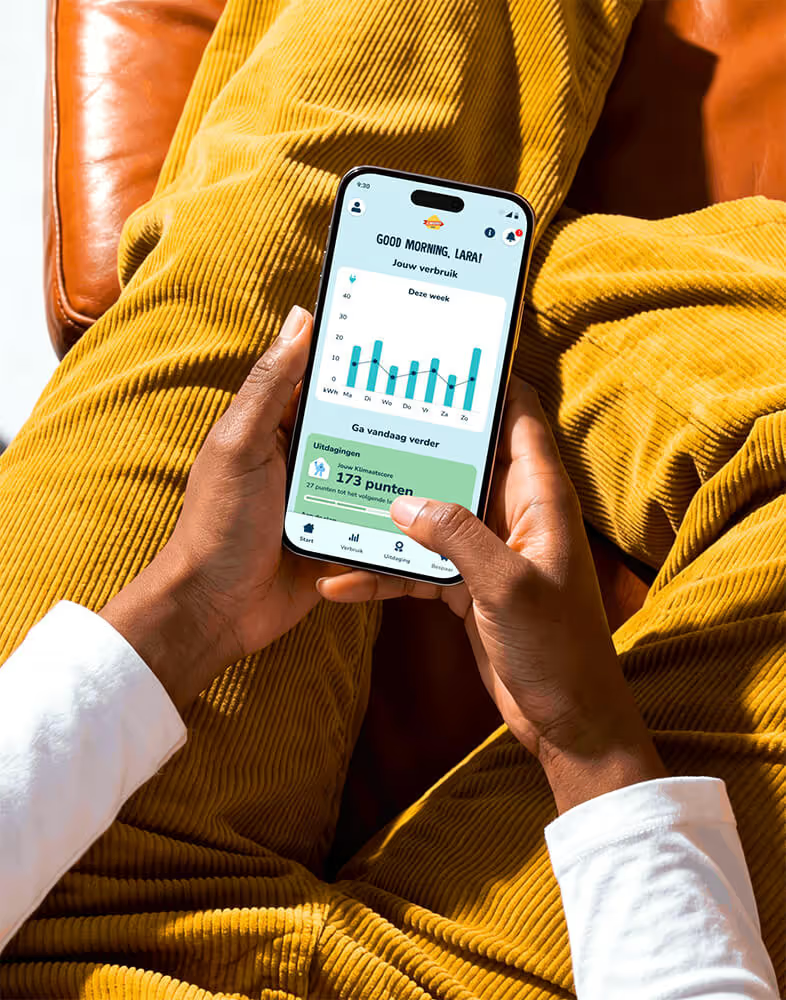

Helping Dutch households use less energy
Research and a redesign for an app already in users' hands, then the same team kept developing and maintaining it.
Read the case studyCan you take over a prototype we built ourselves?
Yes. We use it as the spec and start with what it usually skips: user accounts, the data model, security, tests and handling real load.
What happens after the twelve weeks?
The engineers who built it can stay on full-time, with a three-month minimum.
Do we own the code and design?
Yes. Both transfer to you on payment, and that's in the contract.
Get a shortlist within three days
You share the roles and the stack in a short form or a thirty-minute call. Within three working days you get named senior engineers to review, each with both scorecards, and you can hire within five.
 ISO 27001
Certified